


Issue No. 2Fri, November 20, 2026
On the Shelf
Never Split the Difference
Never Split the Difference, by Chris Voss (2016)
Chris Voss's hostage-negotiation book argues that emotion, not logic, decides most deals. Here is how to use it in your own fee, referral and file conversations.

 Chris Voss spent years as an FBI hostage negotiator, and his argument is that most of the negotiation advice people learn - aim for win-win, meet in the middle - misreads how people actually decide. In his account, deals turn on emotion, trust and a felt sense of safety far more than on logic or a fair-sounding number. Splitting the difference, he says, often leaves both sides with an outcome neither really wanted.
His answer is what he calls tactical empathy: naming and reflecting the other person's feelings and point of view, not to be kind, but to lower their defences and bring out what they actually care about. The tools are simple to describe and harder to practise. Mirroring repeats the last few words someone said, as a question, so they keep talking. Labelling puts their emotion into words ("it sounds like the timing worries you"). Calibrated questions, the ones that start with "how" or "what", slow the conversation down until the real issue shows itself.
Voss also argues that chasing a quick "yes" is often counterproductive. A yes given to end a conversation commits nobody. What he listens for is "that's right", the sign that the other person feels understood. And he suggests letting people say "no" early, because a no gives them a sense of control and makes the rest of the conversation feel safer.
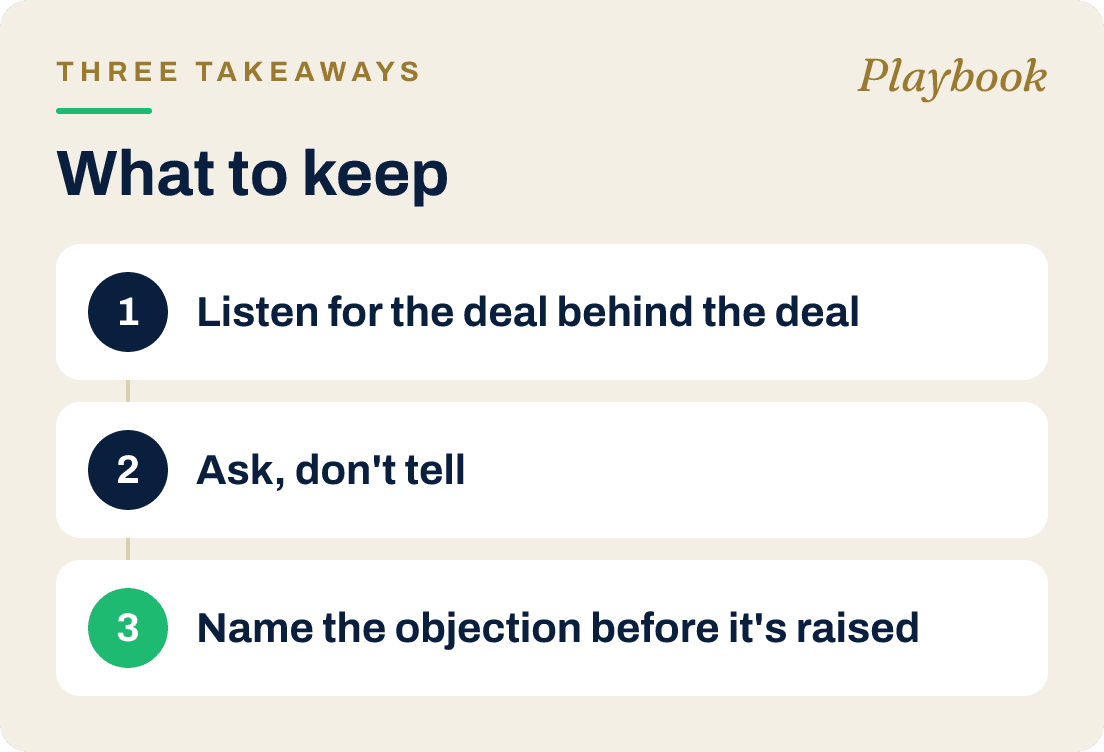
Three takeaways
Listen for the deal behind the deal. Stated positions rarely explain the whole picture. Tone, hesitation and word choice often tell you more than the numbers on the table, and the concern actually driving a decision is usually in how something is said, not what.
Ask, don't tell. A "how" or "what" question invites the other person to work on your problem with you instead of defending a position against you. Voss suggests that people who feel in control are more willing to cooperate.
Name the objection before it's raised. His accusation audit means saying out loud the worst thing the other side might be thinking about you or your offer, before they say it. He argues it takes the sting out of the objection and earns more trust than steering around it.
In your deals
For realtors
This looks less like countering a number at once and more like naming what the other side is likely feeling first: a buyer's worry about financing, a seller's fear of leaving money on the table.
For mortgage brokers
It can mean asking "what would need to be true for this to work for you?" on a follow-up call, instead of asking whether the client is ready to sign.
For both: when you have news a client won't like, such as an offer under what they hoped for or a rate that moved against them, an accusation audit gives you the opening line: say the frustration they are about to feel before they have to.
In your own business
The same habits apply to the conversations that decide how your business runs, not only the ones that decide a client's deal.
Take the commission conversation. When a seller pushes on your fee, the reflex is to defend it or trim it. Voss would have you label it first ("it sounds like you're worried you're paying for more than you'll get") and then ask a calibrated question ("what would you need to see from me to feel the fee is earned?"). Whatever the answer, you learn what that seller actually values, which is more useful to you than a smaller percentage.
Take the agent on the other side, or the underwriter you need a favour from on a tight file. These are people you will deal with again next month. Mirroring and labelling cost nothing, keep the temperature down, and make you the professional they would rather pick up the phone for.
Take your referral partners. Before you ask a lender, a lawyer or another agent for more business, an accusation audit can open the call honestly: "You probably get asked for referrals every week, and you may be wondering what's different about me." It names what they are already thinking and makes room for a real answer.
One practical way to start: pick one recurring conversation in your week, whether the fee talk, the price-reduction call or the referral ask, and try a single tool in it. A label, a mirror or one "how" question is enough. Voss's point is that the skill is listening, and listening improves with use.
See you next Thursday.
Sharing the Grade
The best thing you can do for a colleague this week? Send them Above Grade.
Get tomorrow’s Brief in your inbox.
Free for realtors, mortgage brokers, and specialists.