


Issue No. 1Thu, November 12, 2026
One Move
Give every client a next date
One field in your client list, filled in over a month, gives every past client a real reason to hear from you.

This one suits you if most of your business comes from people who have already worked with you, or should be coming from them and is not. It works the same for a realtor with a few hundred past clients as for a mortgage broker with a book of renewals. The move: give every client in your database one next date, a specific moment in their life when you have a genuine reason to get in touch, and build your follow-up around those dates instead of around the calendar.
Most client lists are full of names, emails and closing dates, and very little else. So follow-up ends up generic: a holiday card, a market update, a letter that goes to everyone at once. None of that is wrong, but none of it gives a past client a reason to pick up the phone. A next date does. It is the month their lease ends, the year their fixed term comes up, the summer they said the second child would arrive, the spring they planned to finish the basement, the point their parents started talking about downsizing. When you call about something they told you, it reads as attention, not as a pitch.
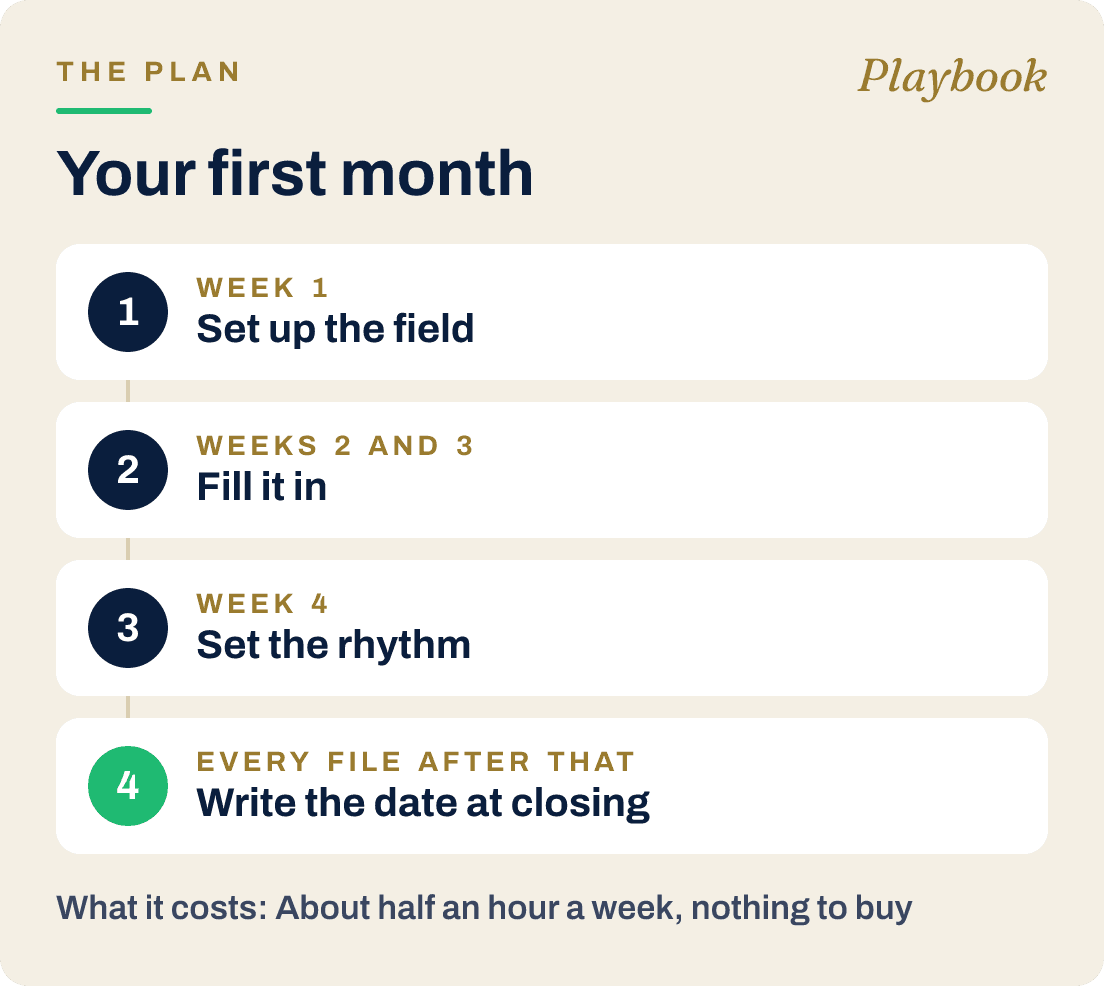
Week 1: Set up the field
You need two things on every contact: a date, and one short line saying what it is ("term ends, five-year fixed" or "lease up in May, wants to buy first"). If your CRM allows custom fields, add them there. If it does not, a spreadsheet with four columns is enough to start: name, next date, the reason, last contact. Do not buy new software for this. The habit matters more than the tool, and a tool you have to learn is one more reason to stop.
Weeks 2 and 3: Fill it in
Start with the clients you closed with in the last two years, since they remember you best. Go through your notes, your emails and the file for each one, and look for a date they mentioned. For mortgage clients the term end is usually already on file. For buyers and sellers it is often an offhand line from a showing or from closing day. If you find nothing, that is useful too: put them on a short list to call simply to catch up, and listen for the date in that call. Twenty minutes a day is a sensible pace.
Week 4: Set the rhythm
Once a week, at the same time, sort the list by next date and look ninety days ahead. Anyone whose date falls in that window gets a personal call or a short personal note from you, about their thing: "You mentioned the lease runs out in the spring. Still thinking about buying before then?" A mortgage broker can open the renewal conversation well before the lender's letter lands. Keep it short and specific, then update the line with what you learned and set the next date.
Every file after that: Write the date at closing
Before you mark a deal done, ask what this client's next moment is likely to be, and note it while the conversation is fresh. It takes a minute, and that minute is what turns a closing into the start of the next file.
What it costs. Time, not money: an hour or so to set up, the backfill spread over two weeks, and about half an hour a week after that. If your brokerage already gives you a CRM, there is nothing to buy.
What can go wrong. You will find gaps, and the temptation is to fill them by guessing; do not, since a wrong date is worse than none. Notes about family or health can feel intrusive if you read them back word for word, so write down plainly what the client told you and keep it to what they would be comfortable seeing. Keep the list where your brokerage's privacy policy allows, not in a personal notes app. If any of these touches go out by email or text rather than a call, send them only to people you already have a relationship with, include an easy way to opt out, and stay within Canada's anti-spam rules and your brokerage's or regulator's policies. A call from you to a past client is the simplest route of all.
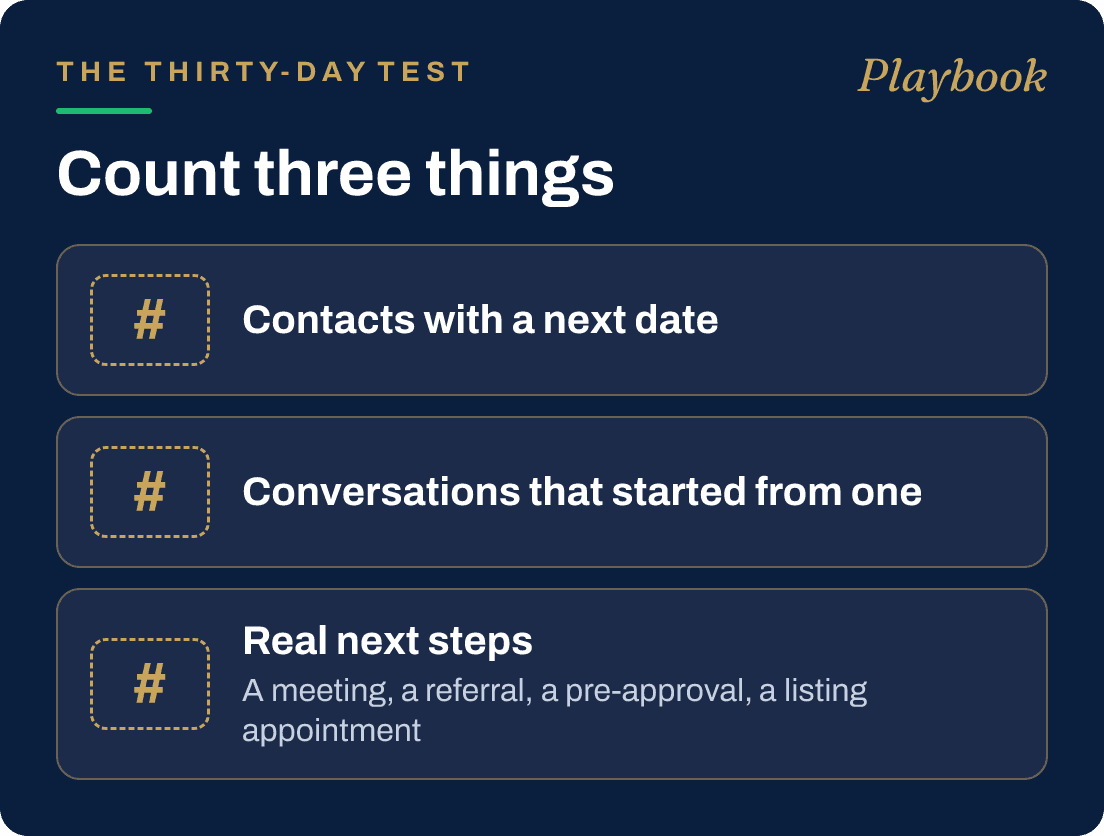
How you will know in thirty days. Count three things. How many contacts now have a next date, how many conversations this month started from one, and how many of those led to a real next step, such as a meeting, a referral, a pre-approval or a listing appointment. Do not expect a closing inside a month; the test at thirty days is whether the conversations happened and felt natural. If they did, keep going. If the list is still mostly blank, give the backfill two more weeks before you judge the rhythm.
Next Thursday is a book week: one well-known business book, in plain words, and how to put it to work.
See you next Thursday.
Sharing the Grade
The best thing you can do for a colleague this week? Send them Above Grade.
Get tomorrow’s Brief in your inbox.
Free for realtors, mortgage brokers, and specialists.