The tariffs attach at 12:01 Wednesday morning. And Ontario's regulator quietly posted two discipline notices naming its own former chair. The names matter here. The notice against the brokerage goes further: commingling trust funds with brokerage funds, improperly disbursing them, and failing to report shortfalls. The provincials came in soft: Ontario sales down 1.3 per cent, the average price down 2.9, national activity off 5.3.

Good Morning. Last week we asked whether CREA's provincials or Wednesday's tariffs would set the tone for the fall. The provincials came in soft: Ontario sales down 1.3 per cent, the average price down 2.9, national activity off 5.3. The tariffs attach at 12:01 Wednesday morning. And Ontario's regulator quietly posted two discipline notices naming its own former chair.

📊 Market Snapshot

Ontario Active Listings

↓ 5.1% YoY (75,759)

BoC Overnight Rate

2.25% (Unchanged)

5 Yr GoC Bond Yield

↑ 3.23%

Ontario Avg Home Price

↓ 2.9% YoY ($797,486)

GTA Avg Home Price

↓ 4.5% YoY ($1,003,956)

GTA Home Sales

↓ 0.9% YoY (5,995)

National Home Sales

↓ 0.9% YoY

📰 Top Story

RECO Refers Its Own Former Chair

Ontario's real estate regulator has referred Katie Steinfeld — broker of record and president of On the Block Realty Inc. — and the brokerage itself to its Discipline Committee. The notices went up on RECO's enforcement page on August 5 and surfaced in the press last week. Steinfeld is alleged to have failed to review and sign trust account reconciliations within required timelines, and to have failed to ensure the brokerage met its trust account and reporting obligations under TRESA. The notice against the brokerage goes further: commingling trust funds with brokerage funds, improperly disbursing them, and failing to report shortfalls.

The names matter here. Steinfeld joined RECO's board in 2020, was elected chair in May 2023 and reappointed in May 2025 — then removed that December with the rest of the board when the province installed an administrator after the iPro Realty collapse. She co-founded the Woodbridge brokerage in 2018 with her husband, Daniel Steinfeld, TRREB's 2026 president and a name quoted in this newsletter three times this summer on GTA conditions.

The Steinfelds have responded. In a statement to REM, they said the incidents involved money that was deposited inadvertently and temporarily into the wrong account, and that no dollar was ever missing or misappropriated. RECO has not disclosed a shortfall figure, no hearing date has been set, and none of the allegations have been proven.

What gives the file weight beyond the personalities is timing. RECO's new brokerage financial filing regime takes effect October 1, with the first annual statements due October 30 — a reform built directly on the $10-million trust shortfall at iPro. Trust accounting is the through-line from that collapse, to the administrator, to the filing rules, to this referral. The regulator is now applying that standard to the person who chaired it while the standard was being written.

WHY IT MATTERS

  • For brokers: Trust account discipline is what your realtor referral partners will be talking about all fall. Knowing the October 30 filing deadline is real makes you the person in the room who saw it coming.

  • For realtors: Your client's deposit sits in a brokerage trust account. If you cannot describe how yours is reconciled and who signs off, ask before October rather than after.

  • For everyone: This is what a regulator under administration does to prove independence. Expect more enforcement notices, not fewer, and expect them on names you recognise.

🗞️ Rest of the News

Real And RE/MAX Shareholders Say Yes

Securityholders of both The Real Brokerage and RE/MAX Holdings approved Real's acquisition of RE/MAX — roughly US$880 million in enterprise value — at special meetings held August 14. Real's shareholders backed the arrangement with 99.01 per cent of votes cast — 134,411,565 for against 1,339,216 opposed — clearing the two-thirds threshold with room to spare, and RE/MAX stockholders passed all four merger proposals. One condition now stands between the two companies and closing: a final order from the Supreme Court of British Columbia.

Why it matters:

The vote settles whether this happens. It does not settle brand strategy, commission structures or franchise agreements — and those are the details that will actually reach your desk.

Royal LePage Is Splitting Into Smaller Pieces

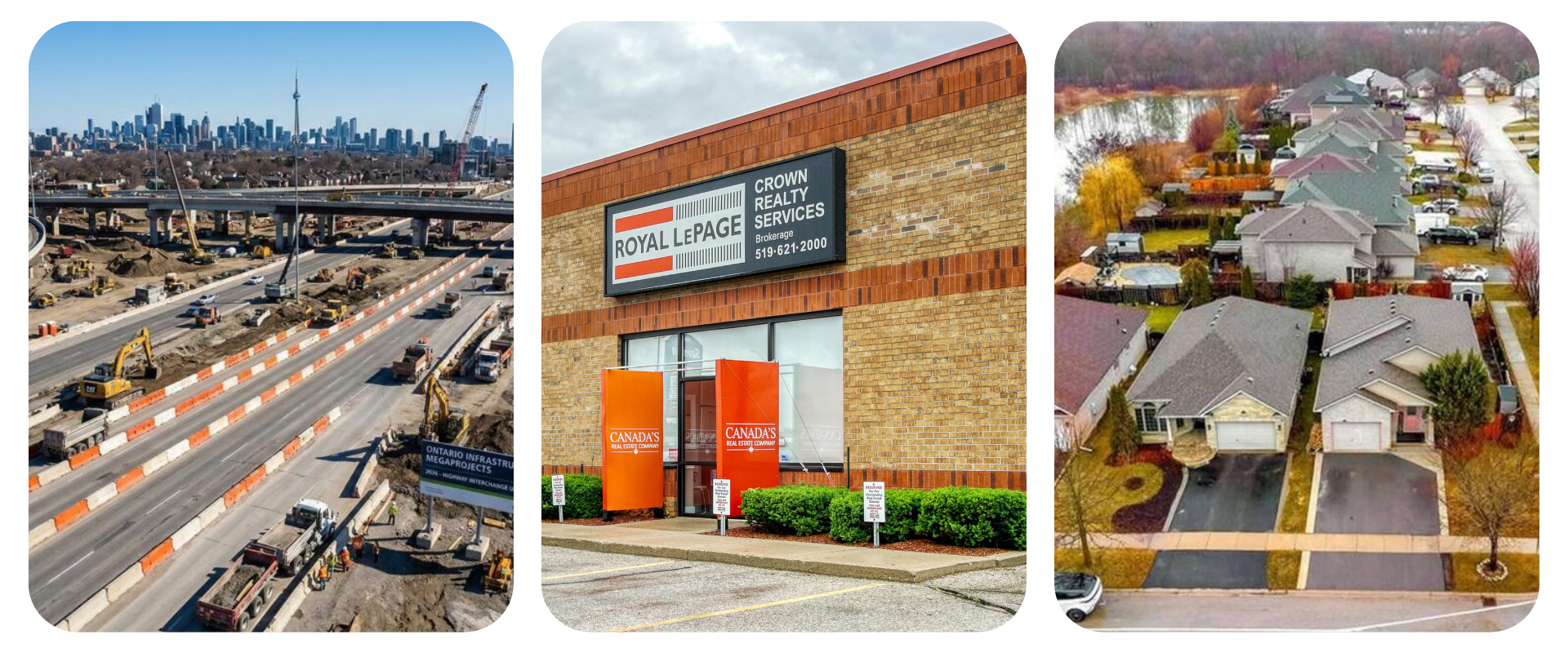
Bridgemarq Real Estate Services, which operates Royal LePage, Proprio Direct, Via Capitale and Johnston & Daniel, reported second-quarter revenue of $97.5 million on August 13, down roughly 10 per cent from $108 million a year earlier. Buried in the results is a structural detail worth more than the revenue line. At June 30 the franchise network held 19,352 agents under 285 franchise agreements. A year earlier it was 20,745 agents under 282. The brand added three franchises and lost 1,393 agents — the average network office is meaningfully thinner than it was in June 2025.

Why it matters:

A network splitting into more and smaller offices changes who you negotiate with. Smaller shops carry less administrative depth, slower compliance turnaround and thinner trust-account infrastructure — which is precisely the capacity RECO's October filing regime is about to test.

Ontario Ties $1B To Not Charging Developers

Ontario and the federal government announced up to $1 billion on Sunday for municipal infrastructure — roads, bridges, water systems — each level contributing $500 million. The eligibility condition is the story: the money is directed at municipalities that do not collect development charges. Acting infrastructure minister Todd McCarthy framed it around municipalities carrying repair backlogs without a development charge revenue base; federal Housing Minister Gregor Robertson pitched it as lowering up-front costs. Applications open October 29.

Why it matters:

Queen's Park has moved from rewarding municipalities that cut development charges to funding the ones that never levied them — which points at smaller, rural and northern markets rather than the 905.

Zoned To Build, Too Complex To Own

TRREB and OREA are jointly asking the province for a streamlined condominium ownership model for multiplexes of six units or fewer, in an advocacy position published August 10. Their case: Ontario's condo framework was written for towers, so selling the units in a new fourplex means the same application, professional studies and administration as a 200-unit high-rise. Cities have spent three years legalizing the missing middle; the boards argue uptake stays low partly because the units are hard to own individually — so what gets built defaults to rental.

Why it matters:

If the province takes the ask, fourplexes and sixplexes become sellable unit by unit — turning a rental-only building type into listing inventory for realtors and purchase files for brokers.

Regional Spotlight: BRANTFORD

A market where the average price and the benchmark disagree

The Brantford Regional Real Estate Association recorded 148 sales in July, up 2.1 per cent from July 2025 — three more transactions, which is as close to flat as a small board gets. Year to date the region has posted 911 sales, down 5.3 per cent. Supply is doing what it is doing across the Golden Horseshoe: new listings fell 10.2 per cent to 343, active listings eased 4.6 per cent to 680, and months of inventory tightened to 4.6 from 4.9 — still well above the long-run July average of 2.8.

Now the part worth reading twice. July's average sale price was $696,351, up 3.8 per cent year over year, and dollar volume rose 6 per cent to $103.1 million. Over the same twelve months the MLS Home Price Index composite benchmark fell 5.5 per cent to $628,400, with single-family down 5.6, townhouses down 6.7 and apartments down 6.3. Both numbers are correct. The average describes what happened to sell in a 148-transaction month; the benchmark controls for what those properties actually were. The year-to-date average of $676,701, down 2.7 per cent, sits much closer to the benchmark's story than July's headline does.

WHY IT MATTERS

  • For realtors: A seller in Brant County who has found the plus-3.8-per-cent figure will arrive convinced the market turned. In a board this size, one month of averages is a composition report, not a trend. Bring the benchmark and the year-to-date number to that appointment.

  • For mortgage brokers: When averages rise while the benchmark falls, the gap tends to show up at the appraisal. Townhouse and apartment files carry the widest spread here, and a purchase priced off recent averages in those segments is the one most likely to come back short.

⚡ Quick Hits

  • YIELDS SPIKED, THEN SETTLED — the five-year Government of Canada benchmark closed at 3.34 per cent on Monday, its highest print in months, before easing back to 3.23 per cent by Thursday. Fixed-rate pricing follows this line, not the overnight rate.

  • THE TARIFF DEADLINE IS WEDNESDAY — the additional 50 per cent Section 338 duty attaches at 12:01 a.m. on August 19. Late last week the U.S. trade representative said Canada needs to drop its retaliatory measures, and Canada's chief negotiator told an advisory group significant work remained.

  • TWO PRINTS STILL TO COME — CMHC's July housing starts publish this morning at 8:15, and Statistics Canada's July inflation reading lands later this week. Both arrive after this email does.

  • SIDDALL RETURNS — Ottawa named former CMHC chief Evan Siddall inaugural chair of Build Canada Homes, its housing Crown corporation; he holds the board's powers alone until at least eight directors are appointed.

⛏️ Tip of the Week

Ask About The 45 Days

If your client is buying a newly built freehold home, they have 45 days from signing the agreement of purchase and sale to register that purchase with Tarion. Miss it and they keep coverage, but their deposit protection moves into a separate pool for unregistered buyers with an annual cap shared across the province — prorated, and paid out later. This does not apply to new condominium units, whose deposits are held in trust and protected differently. Most buyers have never heard of the requirement, and it is the kind of thing a client remembers you for two years later when it never becomes a problem. Raise it at the offer, not at closing.

⁉️ Trivia / Poll

Question: Brantford's average sale price rose 3.8 per cent year over year in July. What did the region's MLS Home Price Index benchmark do over the same twelve months?

A) Rose 3.8 per cent

B) Rose 1.2 per cent

C) Held flat

D) Fell 5.5 per cent

(Answer at the bottom.)

📓 Closing Note

It was a week about institutions rather than markets. A regulator referred its own former chair, a national brand disclosed it has 1,393 fewer agents than a year ago, two brokerages cleared the last shareholder hurdle to becoming one, and TRREB and OREA asked Queen's Park to rewrite how small buildings are owned. None of that changes a price. All of it changes who you will be dealing with by spring.

The July numbers say the market did not break, it just kept easing — Ontario sales within a point and a half of last year, prices down under three per cent, inventory tightening rather than building. The tariffs attach Wednesday, CMHC's starts land this morning and inflation follows this week. Next Tuesday we will know which of those actually moved a rate.

See you next Tuesday.

Answer: D) Fell 5.5 per cent — to a benchmark of $628,400. The average price reflects what sold in a 148-sale month; the benchmark controls for property type and condition. In small boards, the two routinely point in opposite directions.

🤏 Sharing the Grade

The best thing you can do for a colleague this week? Send them Above Grade.

Click to Share

Copyright © {{right_now.year}}  Above Grade, All rights reserved.

Our e-mail address is:
abovegrade@treadstonelaw.ca

Want to change how you receive these emails?
You can unsubscribe by clicking
here.